What Happens When Technology Cannot Explain the Evidence?
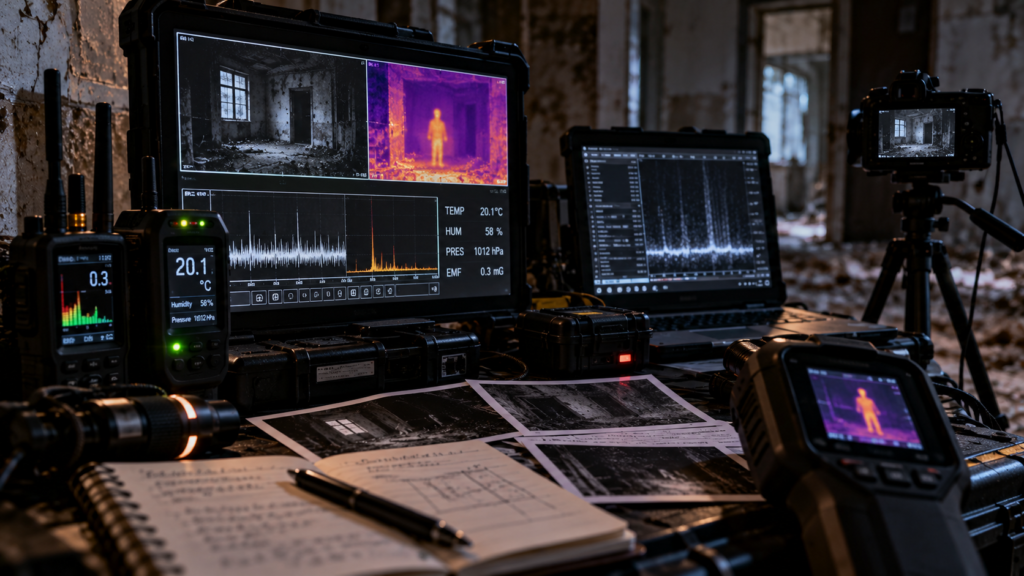
Technology has transformed the way investigators examine unusual events. Cameras can record activity that might otherwise go unnoticed, environmental sensors can measure changes invisible to human senses, and laboratory instruments can identify substances that would have been impossible to analyze using older methods. With modern equipment, investigators have access to an extraordinary amount of information, allowing them to examine events with a level of detail that previous generations could scarcely imagine.
Yet even the most advanced technology has limitations. A camera may capture an unfamiliar object without providing enough information to identify it, a sensor may register an unusual reading without revealing its cause, and a laboratory examination may produce results that are difficult to interpret. These situations can be frustrating because the presence of technical evidence often creates an expectation that a clear explanation should follow. When that explanation does not emerge, investigators must confront an important reality: collecting information and understanding what it means are two very different things.
For organizations investigating unfamiliar phenomena, this distinction is especially important. Technology can help establish what was recorded, measured, or recovered, but it does not automatically determine why an event occurred. Sometimes an instrument reveals a previously overlooked detail that leads to an ordinary explanation. Other times, it exposes gaps in the available information, raises additional questions, or demonstrates that the equipment was not designed to evaluate the phenomenon being investigated.
The Difference Between Detecting Something and Understanding It
Scientific instruments are designed to measure particular physical properties. A thermometer measures temperature, a microphone records sound, and a camera captures light within the range its sensor can detect. More specialized equipment may measure electromagnetic fields, chemical composition, radiation, pressure, vibration, or other characteristics of the surrounding environment. Each instrument provides information within its intended capabilities, but the measurements themselves do not necessarily identify the source responsible for producing them.
Consider an investigator using an electromagnetic field meter inside an abandoned building. The device registers an increase in field strength near a particular wall, and the reading appears unusual compared with measurements collected elsewhere in the structure. The instrument may be functioning correctly, but the increase does not automatically indicate anything paranormal. Electrical wiring, nearby machinery, power distribution equipment, or other sources may influence the reading, and investigators would need to examine those possibilities before reaching a conclusion.
The same principle applies to unfamiliar sounds, temperature variations, and visual recordings. Detecting an unusual measurement establishes that something was recorded under particular conditions, assuming the equipment was operating correctly. Understanding the measurement requires additional information about the environment, the instrument, and the circumstances surrounding the observation. Without that context, even a technically accurate reading may remain difficult to interpret.
When Cameras Capture Something Unfamiliar
Cameras are among the most commonly used tools for documenting unusual events because they preserve visual information that can be reviewed after an incident. Modern imaging systems can operate in low-light conditions, record at high frame rates, and capture portions of the electromagnetic spectrum that human eyes cannot directly perceive. These capabilities make cameras valuable for investigations, but they also introduce technical complications that can affect how recorded images appear.
A photograph may show an unfamiliar shape without providing reliable information about its distance or actual size. Objects close to the lens can appear disproportionately large, while distant objects may lack recognizable reference points. Motion blur can distort the apparent shape of moving subjects, and automatic exposure adjustments can alter brightness or contrast during recording. Digital compression may introduce artifacts that resemble edges, patterns, or movement that were not present in the original scene.
Infrared and thermal imaging systems have additional limitations. Thermal cameras detect infrared radiation and use that information to produce images representing apparent temperature differences, but reflective surfaces, environmental conditions, and material properties can affect the results. A bright region in a thermal image does not automatically identify a living organism or establish that an object is producing an unusual form of energy. Investigators must understand how the equipment interprets the radiation it detects before deciding what a particular image reveals.
When a recording cannot be explained immediately, the appropriate response is to examine the original file, review the equipment settings, and consider the conditions under which the image was captured. Additional camera angles or independent observations may help resolve the uncertainty, but sometimes the available recording simply does not contain enough information to identify what was observed.
The Problem With Unusual Sensor Readings
Environmental sensors can reveal changes that people might not notice directly. Instruments may record fluctuations in temperature, humidity, atmospheric pressure, magnetic fields, vibration, or other measurable conditions. When several devices operate simultaneously, investigators can compare their readings to determine whether an unusual event corresponds with changes in the surrounding environment.
However, sensor readings are only useful when investigators understand what the devices measure and how their results may be affected by external conditions. Electronic interference, calibration errors, equipment placement, and environmental variables can influence measurements. A sensor may also respond to a legitimate physical change without providing enough information to identify its cause.
Imagine several instruments operating inside a large industrial structure. One records a temperature decrease while another detects a brief increase in vibration. At first, the measurements may appear connected, particularly if they occur within a similar period. Yet the temperature change might result from airflow entering through a damaged opening, while the vibration could originate from machinery operating elsewhere in the building. Without additional evidence, the timing alone would not establish that the two events shared a common cause.
This is why investigators must be cautious when interpreting patterns. Two unusual readings occurring close together may justify further examination, but correlation does not automatically establish causation. Reliable conclusions require evaluating alternative explanations, repeating measurements when possible, and determining whether the observed relationship remains consistent under controlled conditions.
When Different Instruments Disagree
One of the more challenging situations occurs when instruments appear to provide conflicting information about the same event. A camera may capture movement while a nearby motion sensor records no activity, or an audio recorder may detect a sound that witnesses insist they never heard. A thermal imaging device may display a temperature pattern that seems inconsistent with readings from a contact thermometer placed nearby.
These discrepancies do not necessarily indicate that one instrument is defective. Different devices measure different physical properties, and their results may not be directly comparable. A motion sensor may have a limited detection area, while a camera can record activity beyond that range. A microphone may detect sounds that are difficult for human observers to notice because of competing noise or differences in sensitivity.
Temperature measurements can also vary depending on the methods used. A thermal camera estimates surface temperatures based on detected infrared radiation and assumptions about the material being observed, while a contact thermometer measures temperature at the point where it touches a surface. If the devices are examining different areas or operating under different conditions, their readings may differ without either instrument necessarily malfunctioning.
Before interpreting disagreement as evidence of an extraordinary event, investigators must determine whether the instruments were actually measuring the same conditions. Understanding these distinctions can transform an apparent contradiction into useful information about the environment or the limitations of the equipment.
The Importance of Calibration and Maintenance
Scientific instruments require appropriate calibration, maintenance, and operating procedures to produce dependable measurements. Calibration involves comparing an instrument’s output with known references to determine whether its readings remain within acceptable limits. Without this process, investigators may have difficulty establishing whether an unusual measurement reflects a genuine environmental condition or an error in the device.
Equipment can also be affected by ordinary wear, damaged components, battery conditions, software problems, and exposure to harsh environments. Instruments used in field investigations may encounter moisture, dust, temperature extremes, vibration, and other conditions that influence their performance. A device that operates reliably in a controlled laboratory may behave differently when exposed to unpredictable outdoor conditions.
Documentation becomes particularly important when investigators encounter readings that appear unusual. Recording the instrument model, operating settings, calibration status, location, and environmental conditions allows later reviewers to evaluate the reliability of the measurement. Without that information, even an interesting result may be difficult to interpret or reproduce.
A responsible investigation therefore treats equipment reliability as part of the evidence itself. Before concluding that a measurement reveals something unfamiliar, investigators must establish that the device was suitable for the task and operating within its intended limitations.
When Laboratory Results Raise More Questions
Laboratory analysis can provide information that field equipment cannot. Specialized instruments may identify chemical compounds, examine microscopic structures, analyze biological materials, or measure physical properties with considerable precision. These capabilities allow investigators to study recovered samples under controlled conditions, reducing some of the uncertainties associated with field observations.
Nevertheless, laboratory findings are not always straightforward. A sample may contain multiple substances, show signs of contamination, or produce results that depend on the analytical method used. Some materials require preparation before examination, and those procedures can influence what is detected. Investigators must also consider whether the recovered sample accurately represents the material present during the original incident.
An unfamiliar laboratory result does not automatically establish that a substance is unknown to science. It may indicate that the available reference data are incomplete, the sample is too small for reliable identification, or the material contains a mixture that complicates analysis. Additional testing may be necessary to distinguish between competing explanations.
In some circumstances, the laboratory may be able to describe a material’s properties without determining its exact origin. Investigators might establish that a sample contains particular elements or compounds while remaining unable to explain how it arrived at the location where it was recovered. The analysis would still provide useful information, even though it did not resolve the larger investigation.
The Limits of Artificial Intelligence and Automated Analysis
Artificial intelligence and automated analytical systems can assist investigators by examining large collections of information, identifying patterns, and highlighting observations that may deserve closer attention. Computer vision systems can help locate objects in video recordings, while software tools may compare sensor measurements or identify unusual changes within extensive datasets.
However, automated systems are not independent authorities capable of determining the truth of an unexplained event. Their outputs depend on the data they receive, the methods used during development, and the assumptions built into their operation. A system trained to recognize familiar objects may misclassify unfamiliar shapes, particularly when recordings contain poor lighting, motion blur, or limited detail.
Automated analysis can also identify patterns that appear meaningful but result from coincidence, data quality problems, or limitations in the analytical model. An unusual classification does not necessarily establish that the underlying event was extraordinary. Human investigators must evaluate whether the result is supported by reliable evidence and whether alternative explanations have been adequately considered.
Within a scientific investigation, artificial intelligence is most useful as an analytical tool rather than a substitute for careful reasoning. It may help investigators recognize details they would otherwise overlook, but conclusions still require appropriate verification and an understanding of the system’s limitations.
When Technology Was Never Designed for the Problem
One of the most important limitations of investigative technology is that instruments are developed to measure known physical properties under defined conditions. When investigators encounter something unfamiliar, the available equipment may not be capable of answering every relevant question.
For example, a camera may document the appearance of an unusual object without revealing its composition. A chemical analyzer may identify substances within a sample without explaining how they were produced. A temperature sensor may record a rapid change without determining the process responsible for it. These limitations do not mean that the instruments failed; they mean that the questions being asked extend beyond what those particular tools can establish.
Scientific research often advances through the development of new methods and instruments capable of examining previously inaccessible information. Improvements in microscopy, imaging, spectroscopy, and other analytical techniques have expanded what researchers can observe and measure. Yet every new technology introduces its own limitations, requiring continued refinement and careful interpretation.
When existing equipment cannot adequately investigate a phenomenon, the appropriate response may involve developing new measurement methods, combining several techniques, or consulting specialists from different scientific disciplines. The challenge is to identify what information is missing and determine whether it can be collected reliably.
Why Repeating an Observation Matters
Reproducibility is an important part of scientific investigation because it allows researchers to determine whether an observation remains consistent when examined again under comparable conditions. A single unusual reading may be interesting, but repeated observations can provide stronger evidence that a measurable effect is genuine.
In field investigations, reproducing an event may be difficult or impossible. Environmental conditions change, witnesses may not be present, and the original circumstances may never occur again. Investigators may therefore need to focus on testing individual explanations rather than recreating the entire incident.
If an unusual light appears in a recording, for example, investigators might examine whether reflections, camera settings, or nearby illumination could produce similar effects. If a sensor registers an unexpected fluctuation, they may test the device under controlled conditions or compare it with independent instruments.
Failure to reproduce an observation does not automatically prove that the original event was imaginary or fraudulent. It may simply mean that the necessary conditions were not present during later testing. However, the inability to repeat or independently verify a finding limits the conclusions that can reasonably be drawn from it.
When Technology Cannot Provide a Final Answer
Investigators sometimes reach a point where the available equipment has collected as much useful information as possible, yet the central question remains unresolved. Photographs may be authentic but ambiguous, laboratory findings may be reliable without establishing an origin, and sensor readings may reveal changes that cannot be confidently connected to the reported event.
At this stage, investigators must decide whether additional testing is likely to provide meaningful information. Repeating the same measurements without changing the methods or conditions may accomplish little, particularly when the limitations of the equipment are already understood. A more productive approach may involve seeking independent expertise, reviewing the original evidence, or identifying new methods capable of addressing the unanswered questions.
Sometimes no additional evidence is available. The original event may have ended, physical traces may have disappeared, or important information may never have been recorded. Under those circumstances, the responsible conclusion may be that the available evidence is insufficient to establish what occurred.
This does not make the investigation worthless. Establishing what can and cannot be determined is itself a valuable outcome, particularly when the findings are documented accurately for future examination.
The Role of Technology Within Z.E.R.O.
Within the fictional universe of Z.E.R.O. — Zero Event Response Organization, advanced technology plays an important role in investigating unfamiliar incidents and protecting personnel working in unpredictable environments. Field teams, laboratory specialists, engineers, and analysts may rely on different instruments to document observations, evaluate recovered materials, and determine whether unusual conditions present potential hazards.
However, the organization would still face the limitations associated with scientific measurement. A sensor might detect a change without identifying its cause, while laboratory equipment could reveal unfamiliar properties that require additional research. Specialized technology might help investigators examine an incident more safely or thoroughly, but it would not automatically provide an explanation for every observation.
This distinction is important because Z.E.R.O. investigates reports that may involve ordinary events, misunderstood observations, or genuinely unfamiliar phenomena. The organization cannot assume that every unusual reading represents something extraordinary, nor can it dismiss findings simply because existing equipment cannot immediately explain them.
In some cases, additional testing might resolve the uncertainty. In others, investigators might need to develop specialized methods or equipment suited to the particular conditions they encounter. The responsibility would remain the same: preserve reliable evidence, evaluate competing explanations, and acknowledge the limits of what can be established.
When the Unknown Remains Unknown
Technology has expanded human understanding of the natural world, but it has not eliminated uncertainty. Every instrument operates within defined limits, every recording captures only part of an event, and every analytical method depends on the quality of the information available.
An unexplained measurement does not automatically indicate a paranormal cause, just as a familiar explanation should not be accepted without supporting evidence. The purpose of scientific investigation is to determine what the evidence can reliably establish, even when that conclusion is less dramatic than the original report.
Sometimes the most important discovery is that an instrument was affected by an ordinary environmental condition. Other times, careful examination reveals that an observation was genuine but insufficiently documented to identify its source. Occasionally, research may uncover findings that require new questions, improved methods, or further scientific study.
The limitations of technology should not be viewed as a reason to abandon investigation. They are reminders that collecting evidence is only one part of understanding an event, and that reliable conclusions depend on careful interpretation, verification, and a willingness to acknowledge uncertainty.
Because sometimes, even when every camera is recording, every sensor is operating, and every available measurement has been collected, the answer remains beyond what the evidence can reveal.
And that is when investigators must decide not what they want the evidence to mean, but what it can genuinely tell them.
Ginger Yarbrough
Creator and Author of Z.E.R.O. — Zero Event Response Organization